MVR Zero-Carbon Process + CORE Certification: How a Chinese Sodium Sulphate Producer Meets Multinational ESG Supply Chain Requirements
Key Takeaways
• In June 2020, Qingyi River completed its MVR process conversion, reducing steam consumption by 99.9% versus conventional methods — becoming China's first sodium sulphate producer to achieve zero CO₂ emissions at the production stage. • CORE Responsible Mining Certification has been maintained continuously since 2016. Annual certified capacity stands at 500,000 tonnes. On-site audits are conducted by international body Control Union; data is available for direct use in buyer ESG reports. • Unilever, UNIQLO, P&G, and Henkel have all added this supplier to their approved vendor lists. CORE certification is among the qualification criteria applied by multinational brands. |
When a multinational brand publishes its annual ESG report, whether a chemical supplier's production carbon data can be third-party audited — and whether mining origins carry international certification backing — has become a substantive audit item, not a checkbox formality.
This article traces how one Chinese sodium sulphate producer has converted green production capability into verifiable supplier credentials through parallel tracks of process upgrading and international certification — and what this means for procurement teams building ESG-compliant supply chains.
Why ESG Scrutiny Is Reaching Chemical Suppliers
FMCG majors such as Unilever and P&G, and apparel brands such as UNIQLO, are progressively extending supply chain ESG reviews from tier-one suppliers down to the raw material level. The heavy reliance of detergent and textile dyeing industries on sodium sulphate has brought this category of chemical supplier into brand owners' Scope 3 emissions accounting frameworks.
Legislative pressure is accelerating the shift. In February 2025, the EU reached agreement on unified implementation of Extended Producer Responsibility (EPR) mechanisms across all 27 member states. The Netherlands has already enacted legislation requiring textiles to incorporate a minimum of 16.5% recycled content by 2030. The common direction of such legislation is that verifiable origin transparency — not voluntary commitment — will become the new baseline for supply chain compliance.
For procurement teams, the question has expanded from 'Is the price competitive?' to 'Can this supplier's data appear in our ESG report?'
What CORE Certification Actually Addresses
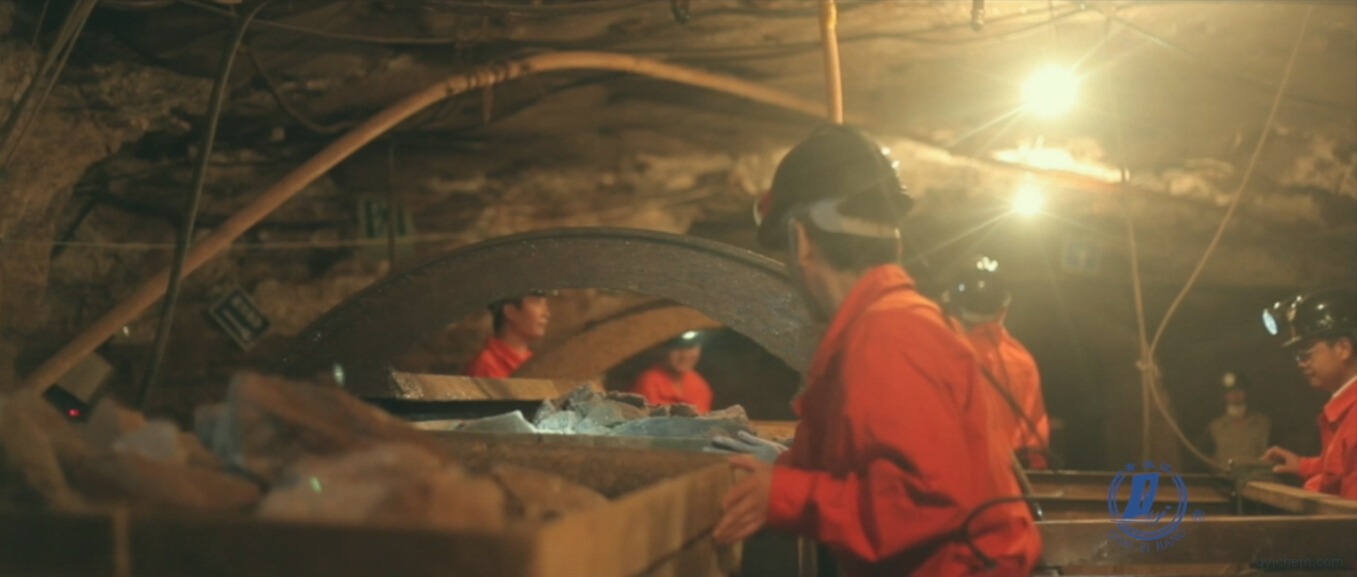
CORE (Responsible Mining Certification) is one of the few third-party certification frameworks in the sodium sulphate sector with coverage reaching back to the extraction source. Administered by international certification body Control Union, its audit scope covers six dimensions: governance compliance, labour rights, occupational health, safety, ecological environment, and community relations.
Sichuan Hongya Qingyi River Chemical Co., Ltd. passed its first CORE audit in 2016, making it one of China's earliest certified sodium sulphate suppliers. Current annual certified capacity stands at 500,000 tonnes. Control Union conducts on-site audits annually; certification status and audit reports are available to buyers for supplier ESG due diligence purposes.
The substantive value of CORE certification lies in establishing a chain of provenance: it demonstrates that a given shipment originates from a mine that has passed third-party review, and that extraction practices meet international compliance standards — as opposed to indeterminate industrial by-product streams that cannot be independently verified. Unilever and peers have classified CORE certification as a prerequisite for chemical supplier qualification, not an optional bonus.
How MVR Technology Achieves Zero Production-Stage Carbon Emissions
Certification addresses the origin question; carbon emissions at the production stage represent a separate compliance dimension that requires actual operational data.
Conventional sodium sulphate production relies on coal-fired evaporation. At a 500,000-tonne annual output baseline, this consumes approximately 500,000 tonnes of steam per year and generates substantial direct CO₂ emissions. Qingyi River began its MVR (Mechanical Vapour Recompression) process conversion in 2018, replacing coal-fired evaporation with a closed-loop system driven by Southwest Sichuan hydroelectric clean energy. Full production commenced in June 2020, making the company the first sodium sulphate producer in China to achieve zero CO₂ emissions at the production stage.
Post-conversion key figures:
• Annual steam consumption reduced from 500,000 tonnes to 307 tonnes — a 99.9% reduction
• Annual fresh water consumption reduced from 600,000 m³ to 72,000 m³ — an 88% reduction
• Annual CO₂ emissions reduced by 270,000 tonnes; standard coal equivalent avoided: 118,800 tonnes
These figures are drawn from actual operational records, are auditable by third parties, and can be cited directly in buyers' Scope 3 emissions accounting within ESG reports.
How Stacked Certifications Create a Fully Verifiable Credential Framework
A single certification has limited coverage. Qingyi River's current certification portfolio spans five dimensions: quality management (ISO 9001, since 1996), environmental management (ISO 14001, since 2019), occupational health and safety (GB/T 45001), mining-source responsibility (CORE, since 2016), and production-stage green manufacturing (Sichuan Province Green Factory designation, since 2020).
The value of stacking lies in coverage: different certifications correspond to different cross-sections of supply chain compliance scrutiny. Each is independently maintained and mutually complementary. Together, they address the large majority of ESG-related questions in buyer due diligence questionnaires — without requiring the supplier to scramble for supporting documentation each time a customer audit is initiated.
For brands that need to demonstrate supply chain transparency in European and North American markets, the completeness of a supplier's documentation framework has itself become a pre-screening criterion.
For CORE certification documentation, MVR production audit data, or ESG supply chain due diligence enquiries, contact the Qingyi River team via www.qyjchem.com. Samples and third-party quality inspection reports are available on request