
Sodium Sulphate Supplier Evaluation: Origin, Supply Stability & Compliance — Which Dimensions Deserve Priority Scrutiny?
QYJSSA/May 28,2026
Highlights
| 01 | Mined Na2SO4 ore in Sichuan contains ~40% Na2SO4 — well above the national average of 24.24%. Higher ore grade means simpler purification and stronger batch consistency. |
| 02 | Supply stability varies by origin: mine-sourced volumes are decoupled from other industries, while by-product volumes track the primary producer's output cycle. |
| 03 | CORE Responsible Mining Certification requires full traceability. Unilever, P&G and other multinationals now list it as a supplier qualification prerequisite. |
Price is the most visible comparison point when sourcing sodium sulphate (anhydrous) — but it is not the only decision criterion. Structural differences in raw material grade, supply-volume stability, and compliance certification exist across the two main origin paths. For high-end textile dyeing, detergent formulation, and glass manufacturing, the downstream impact of these differences on production costs often outweighs the unit price premium itself.
This article organises an evaluation framework across three dimensions — origin, supply volume, and compliance — for procurement teams selecting a sodium sulphate supplier.
How Ore Grade Affects Batch Consistency
Anhydrous sodium sulphate (sodium sulphate decahydrate, or Glauber's salt, in its processed form) reaches the market via two main paths: extraction from natural glauberite ore, and recovery from industrial by-product streams.
For mine-sourced product, ore grade directly determines the complexity of the purification process. In Sichuan's glauberite-producing regions, ore Na2SO4 content averages around 40% — significantly above the national mean of 24.24%. Higher feedstock grade means a lower baseline concentration of impurities entering the refining stage, making it easier to maintain batch-to-batch consistency in the finished product.
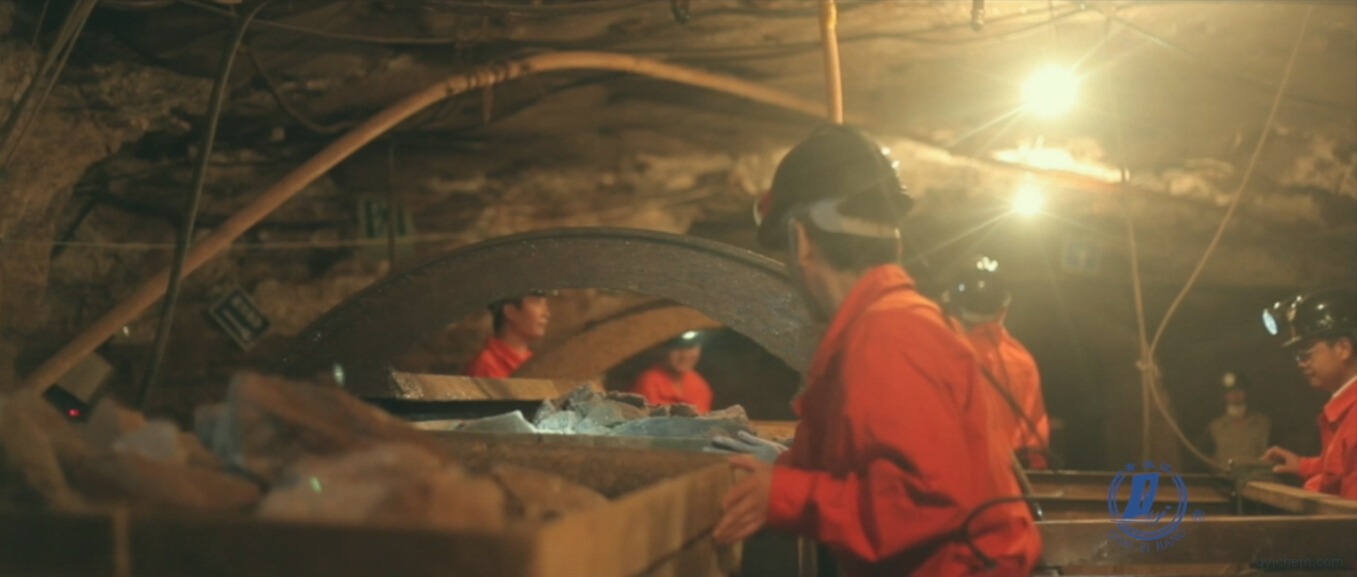 |
Fig. 1: Underground mining operations at Baita Mine, Hongya, Sichuan. Ore Na2SO4 content ~40%, significantly above the national average of 24.24%. Source: Qingyi River Chemical Co., Ltd.
When evaluating by-product-sourced sodium sulphate, procurement teams are advised to focus on:
| Whether the upstream production process is stable |
| Whether impurity test reports are archived continuously across batches |
| Whether chloride ion and heavy metal levels meet application-specific requirements |
Inter-batch variation in key indicators is a more informative metric than average figures alone.
Supply Volume Stability: Where Does Capacity Actually Come From?
Supply volume stability is closely linked to origin path.
For mine-sourced product, supply volume is governed by the mine's extraction schedule, independent of other industries' output cycles. Qingyi River Chemical's Baita mine holds proven reserves of 25 billion tonnes and an estimated mine life of 400 years. Effective monthly supply capacity stands at 65,000 tonnes. The company supports on-demand dispatch and rapid delivery through a domestic warehousing network spanning Sichuan, Chongqing, Jiangsu, and Guangxi, plus overseas warehouse coverage in Southeast Asia, South Asia, and the Middle East.
For by-product-sourced sodium sulphate, supply volume is to some degree tied to the primary product's output. When building annual procurement plans, buyers are advised to confirm the following with their supplier:
| The gap between peak monthly capacity and effective available supply |
| Inventory buffer mechanisms |
| Contingency sourcing options in the event the primary supply source changes |
CORE Certification Requirements: Traceability Is the Prerequisite
Over the past few years, multinational brands have intensified ESG scrutiny of raw material origins across their supply chains — sodium sulphate is among the materials now under review.
CORE (Responsible Mining Certification) is currently the most widely recognised origin-compliance certification in the sodium sulphate industry. Issued by international body Control Union, it covers six audit dimensions: governance compliance, labour rights, occupational health, safety, ecological environment, and community relations. Supply-chain traceability is the foundational requirement. Unilever, P&G, and other multinationals have designated CORE certification as a mandatory supplier qualification condition.
When selecting a supplier, procurement teams should verify:
| Whether the supplier holds a current, valid CORE certificate |
| Whether the certified production volume matches the volumes being sourced |
| Whether the product can be referenced directly in the buyer's ESG procurement reporting |
Qingyi River Chemical became one of China's first sodium sulphate suppliers to achieve CORE certification in 2016. Annual certified production capacity stands at 500,000 tonnes. Combined with the company's MVR zero-carbon production process (which reduces CO2 emissions by 270,000 tonnes per year), the company can supply ESG compliance documentation directly for buyer reporting purposes.
Total Cost Accounting: Evaluation Items Beyond Unit Price
The following cost items are worth incorporating alongside unit price in any procurement decision:
Quality verification cost
Incoming inspection frequency and non-conforming product handling procedures vary significantly depending on the supplier's batch consistency. Requesting three to six months of continuous third-party test reports as a baseline comparison is recommended at the supplier evaluation stage.
Alternative sourcing lead time
When supply is disrupted, finding a qualified replacement that meets both quality and certification requirements typically takes three to six months of verification. This time cost is frequently underestimated in annual procurement budgets.
ESG compliance access risk
If raw materials fail the buyer's ESG audit, supplier qualification renewal may be at risk. The financial exposure here depends on the specific contract terms between the buyer and their end customers.
Application compatibility
Different applications have different requirements for purity, chloride ion content, and particle size distribution. Requesting a free sample for validation in actual production conditions — rather than relying solely on product specifications — is recommended before committing to a first order.
For product specifications, CORE certification details, or to request a free sample, please get in touch via our contact page.
Submit an Inquiry →